This collection of learning stories for ages 4-6 invites young listeners into gentle moments of curiosity, discovery, and imagination. Share these tales during quiet reading time, at bedtime, or whenever your family is ready for a story.
Stories About Curiosity and Discovery
From Pip’s Bakery Delivery Bell to The Pebble Fish by the River, these children’s stories for ages 4-6 feature small details, familiar places, and questions that encourage careful attention. A bakery delivery, a riverbank, or a garden can become the setting for noticing what is happening nearby and wondering what might come next.
Try pausing before the end of a story to ask what your child notices in the setting or what they think a character may do next. There is no single right answer; talking about different possibilities can make reading feel like a shared discovery.
Gentle Themes for Growing Minds
The Chickadee’s Waiting Branch and Hopping Through the Flower Patches suggest patient observation and lively exploration, while June’s Puzzle Corner and The Fort Beside the Garden offer titles that may appeal to children who enjoy figuring things out and imagining play spaces. Together, these learning tales for young children provide varied starting points for conversations about trying, waiting, noticing, and creating.
Keep the experience flexible for your child. Read one story slowly, revisit a favorite another day, or invite your child to describe a picture, retell a moment in their own words, or connect the setting with something they have seen. These simple prompts can help make storytime interactive without turning it into a lesson.
Ways to Enjoy the Collection Together
Families can choose a story based on the mood of the moment: a quiet tale for winding down, a nature-themed title for a daytime read, or a story with a puzzle or fort for imaginative conversation. Caregivers can share the reading aloud, take turns discussing the illustrations, or let children return to the stories they enjoy most.
Whether you read with one child or a group of siblings and friends, these stories offer a warm opportunity to slow down and connect. Let children lead some of the conversation, and keep each reading session comfortable, playful, and suited to their attention span.
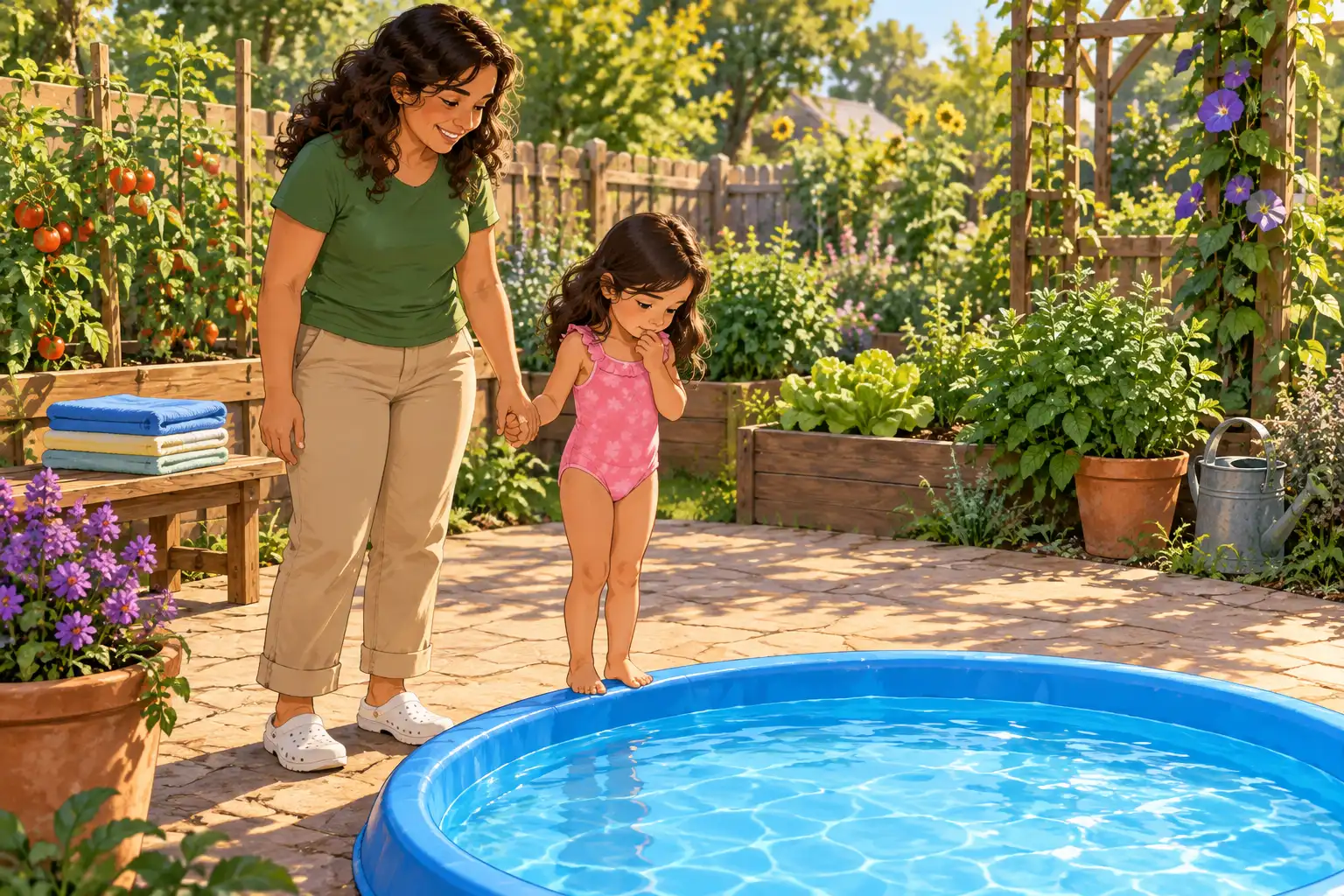
Isla joins Aunt Marisol for a beginner swim lesson with Ms. Tessa at the community garden. When a breeze scatters the towels and rinse cups, Isla helps tidy the path and then proudly shows Aunt Marisol her calm, steady float.
Cameron helps Aunt Leah organize picture signs for a wildlife center’s marked mountain trail, but he accidentally places Pebble the penguin’s picture beside the mountain goat signs. After admitting his mistake, Cameron sorts the pictures by habitat and movement, puts each one where it belongs, and enjoys a proud, peaceful walk with Aunt Leah.
At a science museum, Sana studies Puddle, a green tree frog in a rainforest habitat, then tries to finish a space puzzle. When a curved piece will not fit, she asks Ms. Rivera for help, follows the picture clues, and proudly completes the puzzle before reading its space words aloud.
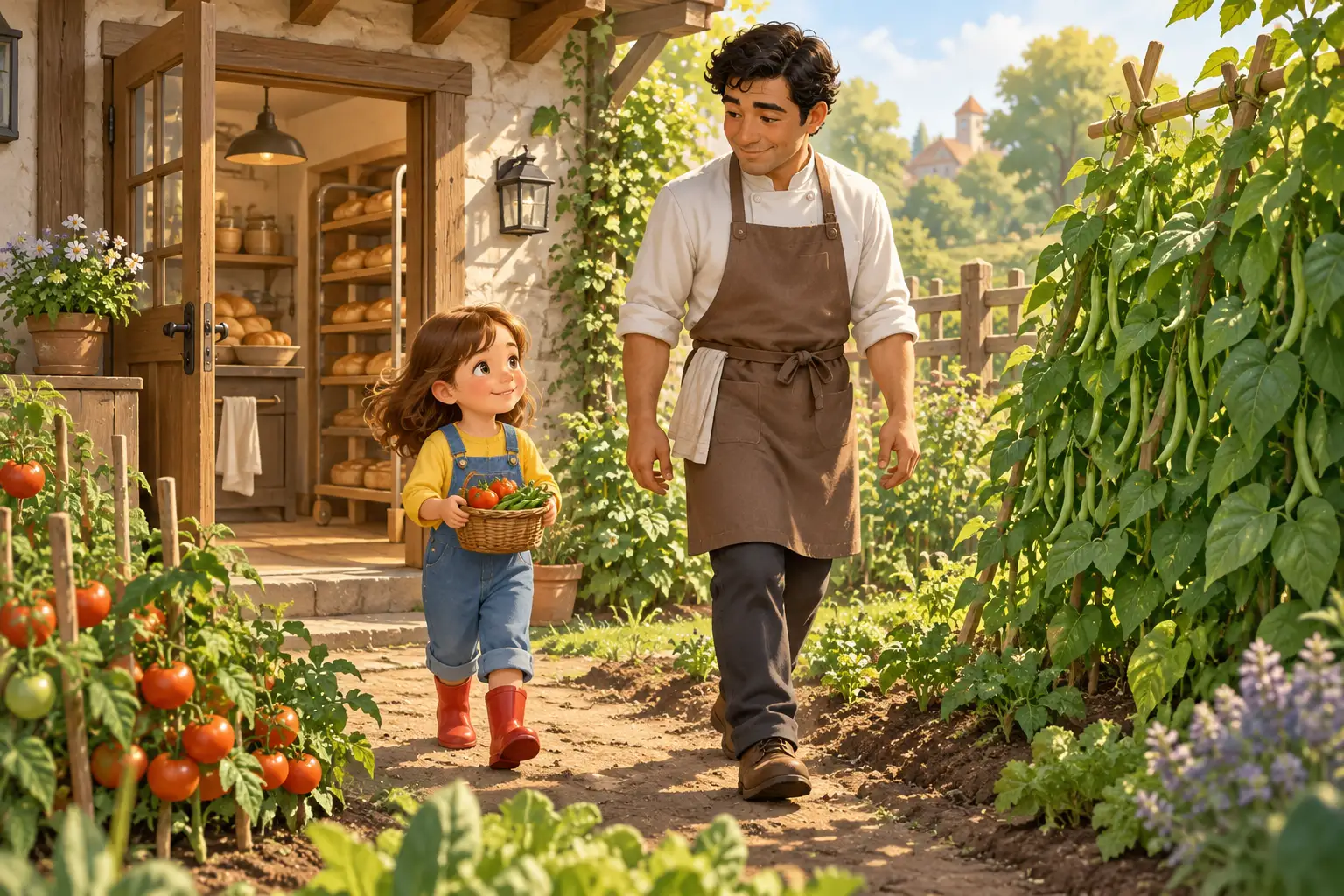
Cora helps Mr. Malik gather ripe tomatoes and beans for the bakery’s lunchtime soup, but thick leaves hide many of the vegetables. With careful guidance from Mr. Malik and cheerful chirps from Pip, a swallow, Cora learns what to look for, finishes the entire row, and settles into the bakery’s story corner with a picture book.
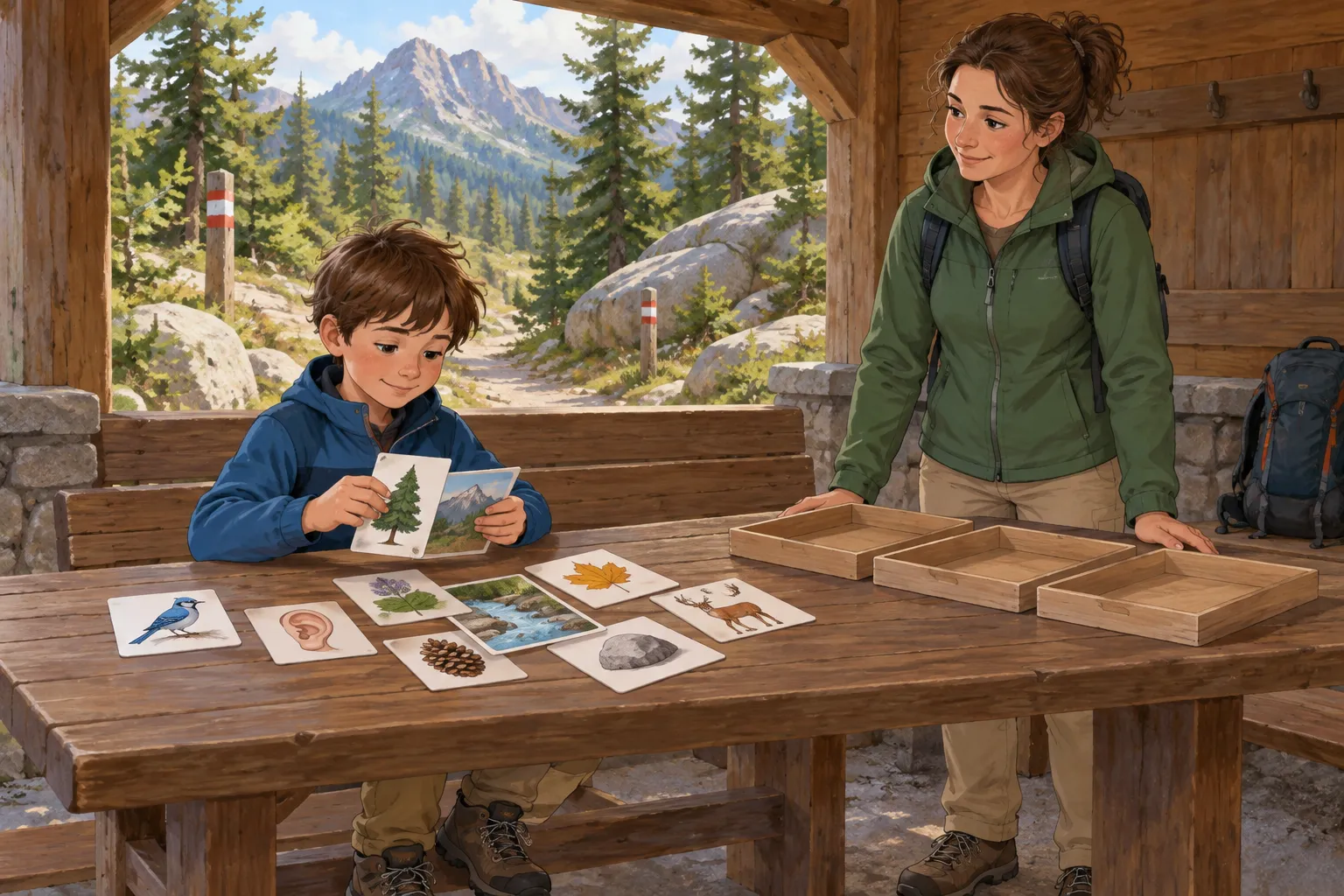
Milo hikes a marked mountain trail with Aunt Elena and Pumpkin, his orange kitten, to lead a quiet nature walk. When the picture cards become mixed up and a new child named Mei feels unsure, Milo invites her to sort them into look, listen, and notice trays. Soon the group is exploring together and sharing small discoveries before heading home.
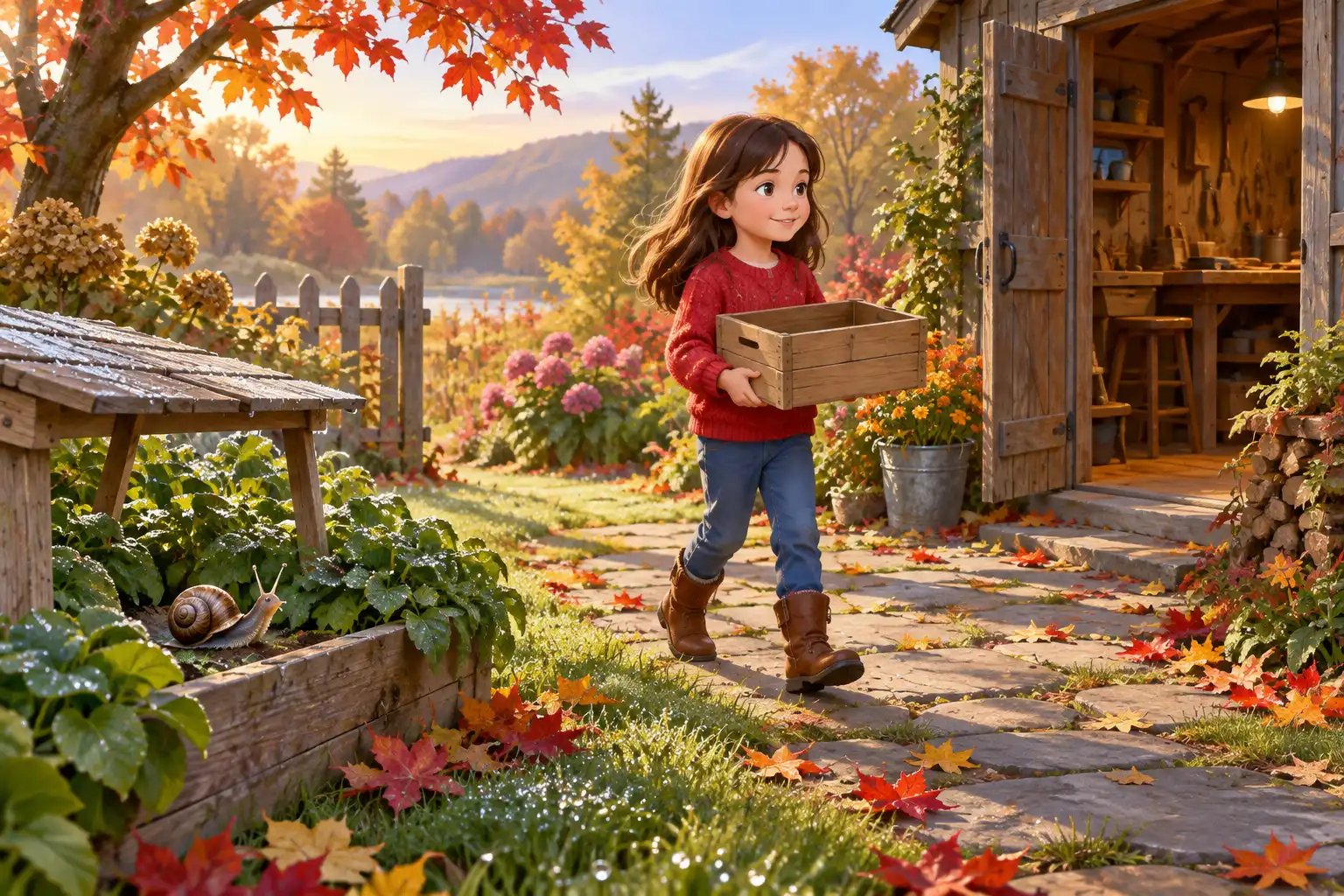
Morgan visits her grandparent’s workshop to sort acorns, pinecones, leaves, bark, and make-believe figures into a story box for kindergarten. When a heavy tray will not fit on the shelf, Morgan asks for help, and together they rearrange and label the trays so her classmates can enjoy creating fall stories.
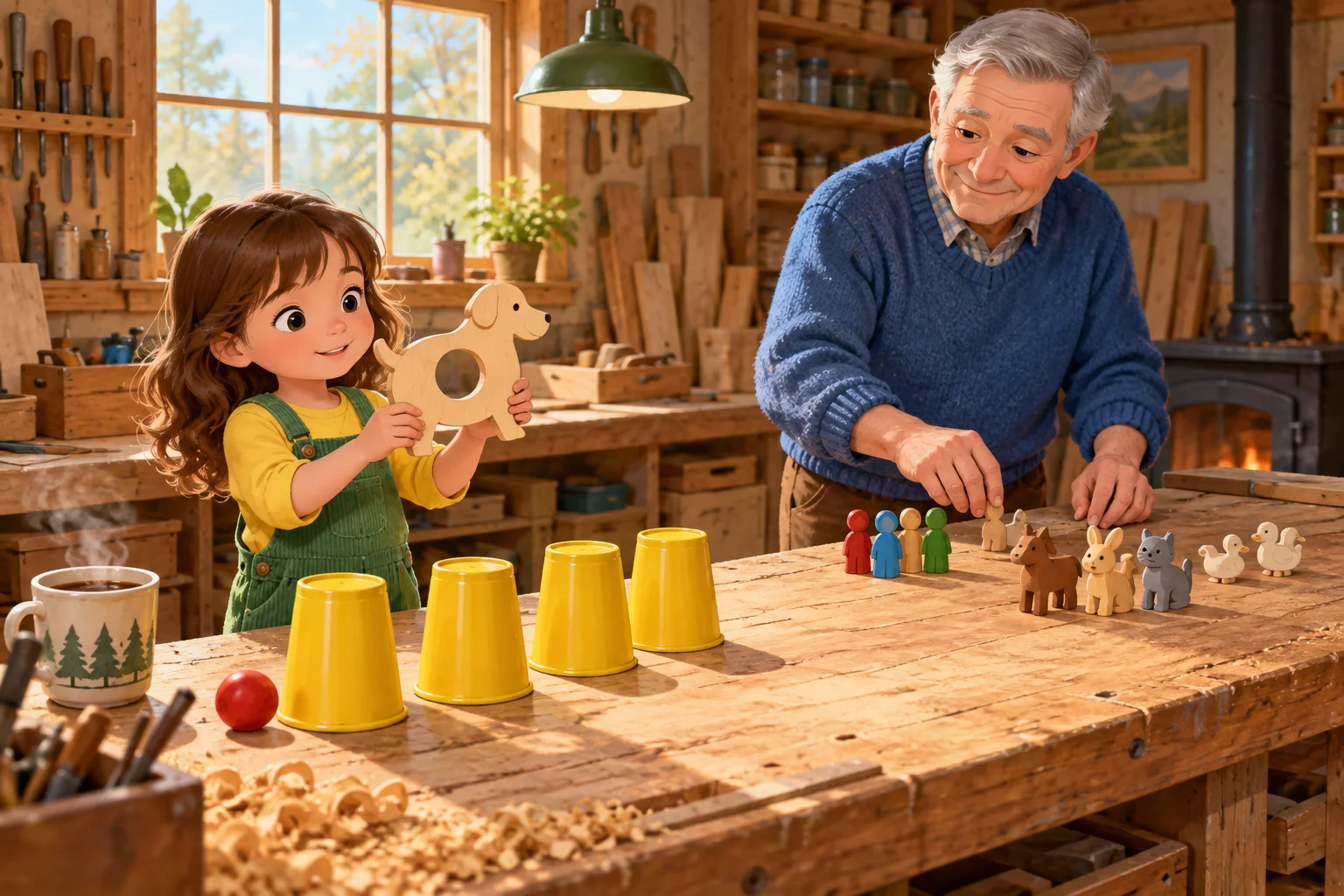
June helps her grandparent build a garden game for young visitors at the wildlife center. When Milo finds the first rules too hard, June changes the game so everyone can plant seeds, choose wooden characters, and roll a ball toward a dog-shaped target. Soon Milo is laughing and creating a garden story of his own.
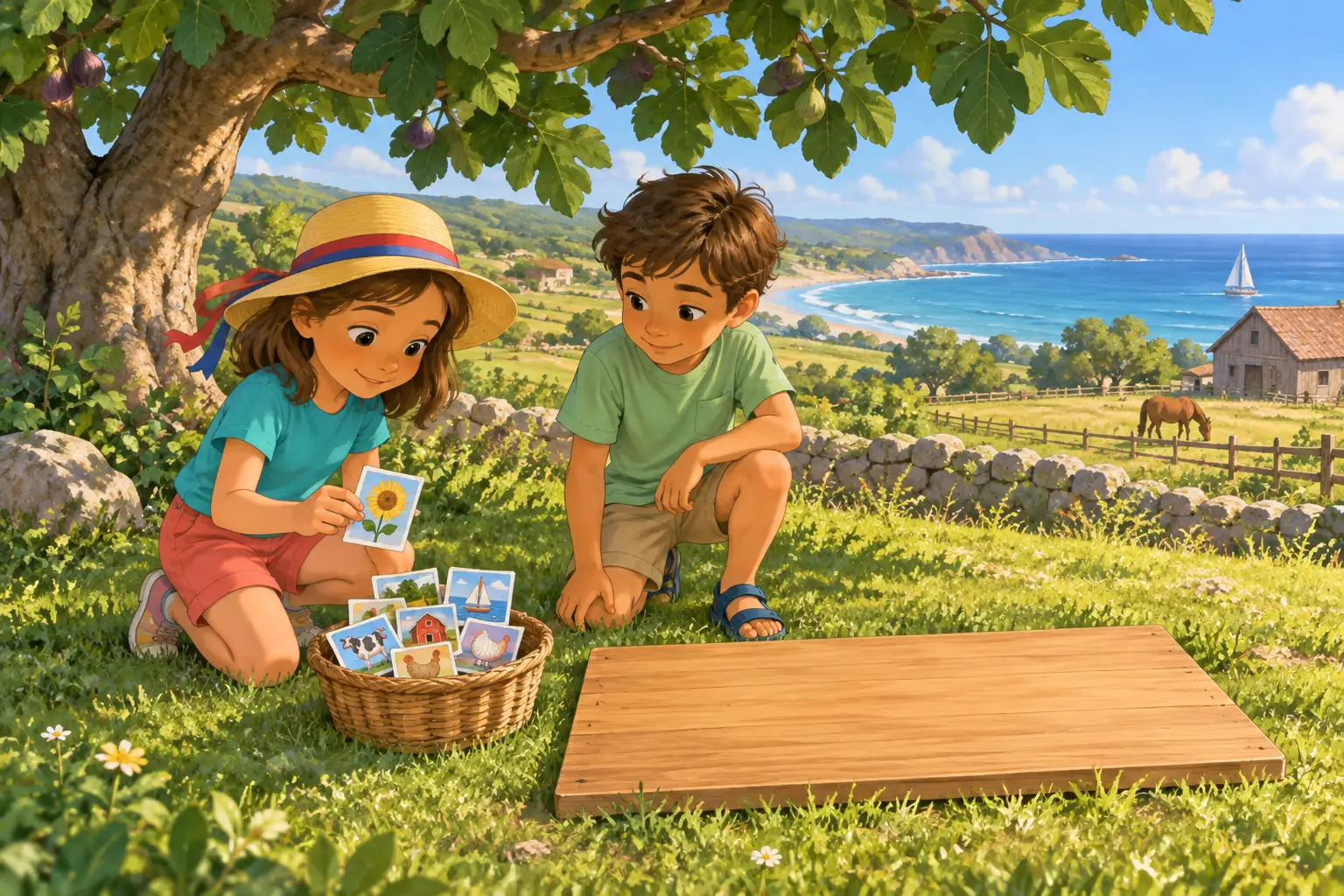
When Nora visits her family’s island farm with Hugo, Aunt Maya asks them to arrange mixed-up farm and beach picture cards into a quiet story for baby Leo’s nap. With help from Dusty the donkey, they create a peaceful sequence that settles the baby and brings a calm afternoon to the whole farm.
Hazel explores a snowy forest with her grandfather and Muffin, their orange kitten. A simple science experiment helps her compare the cold outdoor air with the warm cabin and watch snow melt. By asking before touching Muffin and giving him a dry place to rest, Hazel learns to notice what others need before settling into a peaceful night of slow breathing.
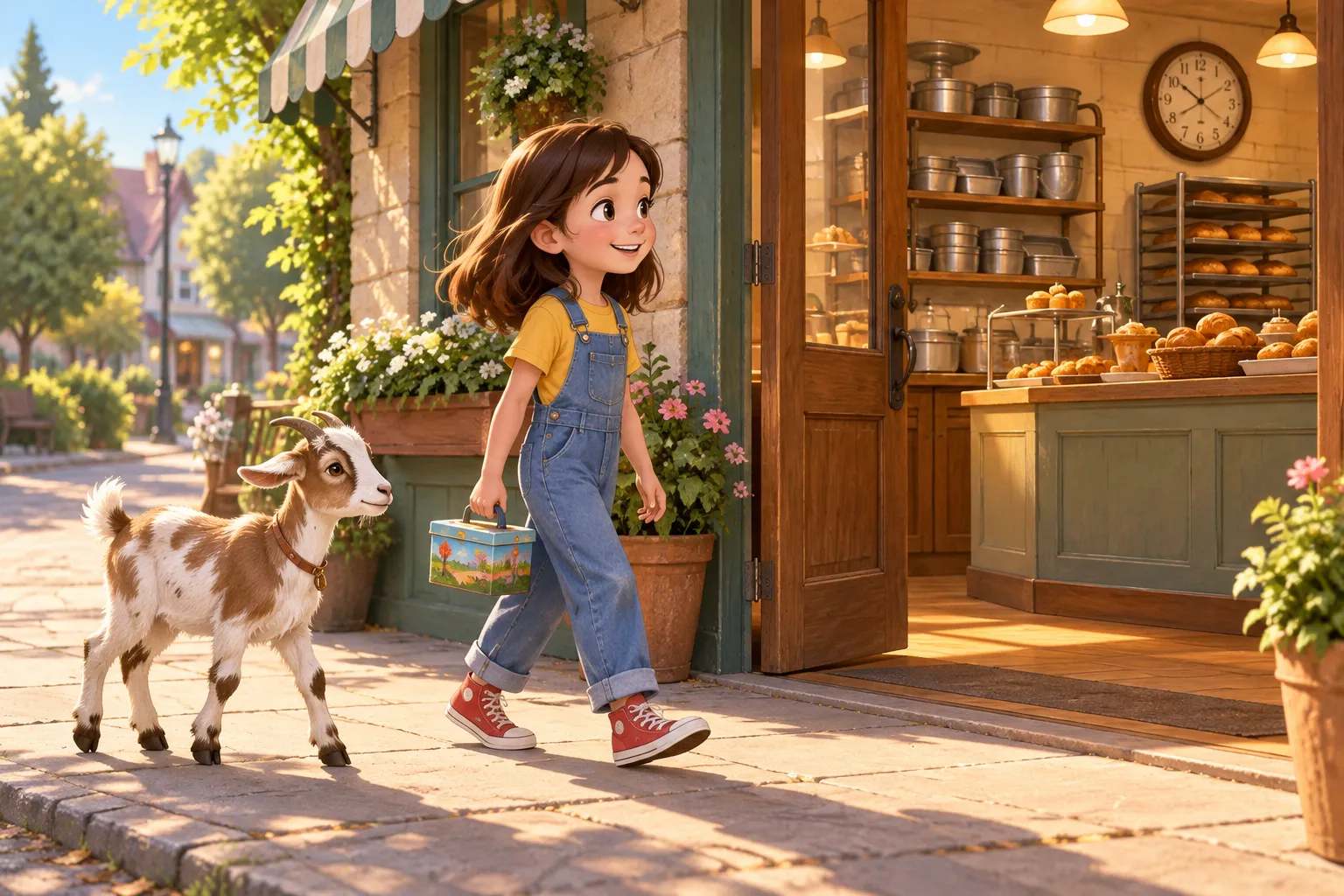
Gabriela visits a neighborhood bakery with Noodle, a baby goat, to paint the steps for making a warm roll. When a gust from the oven fan scatters her picture panels, she listens carefully, follows Noodle’s helpful bleat, and puts the sequence back together for visiting families.