Science experiment stories
Discover science experiment stories that invite children and grown-ups to wonder, notice details, and ask questions together. This collection pairs gentle storytelling with ideas connected to flight, observation, and trying something new.
Stories That Encourage Curiosity
The titles in this collection point toward stories about exploring how things work and paying attention to what happens along the way. In “The Steady Little Plane” and “The Plane That Flew Straight,” young readers can enjoy imaginative reading centered on flight and direction without needing any prior science knowledge.
These tales can open up simple conversations after reading: What helps an object move steadily? What might make something change direction? Families can share their own ideas, draw a plane, or talk about examples they have noticed in everyday life. There is no need to have every answer—the questions are part of the fun.
Gentle Science Through Observation
Science experiment stories can also begin with careful looking. “The Fox by the Windowsill” adds a title connected with noticing an animal, a place, or a moment closely. It offers a natural starting point for discussing what children see around them, how observations can differ, and why details matter when we are trying to understand the world.
As you read, invite children to pause and describe what they imagine, make a prediction about what could happen next, or compare the story’s ideas with something familiar. These low-pressure prompts keep the experience playful while helping children see science as a way of wondering, observing, and exploring.
Ways to Read the Collection Together
Read one story at bedtime, choose a title for a quiet afternoon, or revisit a favorite when your child has a new question. Adults can follow the child’s lead, allowing space for conversation without turning story time into a lesson. Younger listeners may enjoy the rhythm and pictures they imagine, while older children can discuss patterns, choices, and possible explanations.
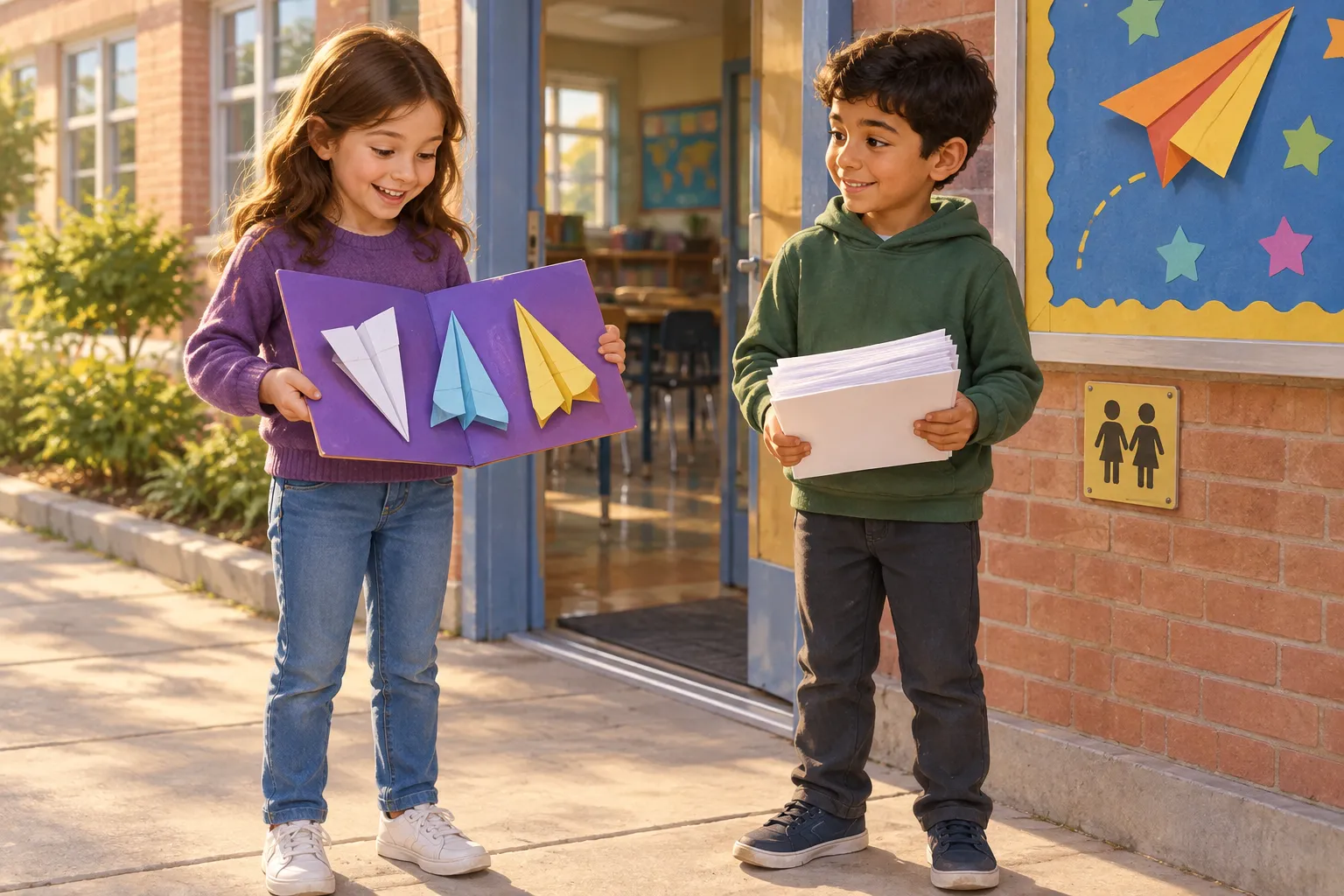
For an easy follow-up, try a safe, everyday activity such as watching how a paper airplane moves or keeping a short observation journal about something outside a window. Keep the focus on curiosity and shared discovery, and adapt the conversation to your child’s age, interests, and comfort.
Stories in this collection (4)
- Muffin and the Melting SnowOctober 18
- The Steady Little PlaneOctober 8
- The Plane That Flew StraightOctober 7
- The Fox by the WindowsillOctober 2