When Amina notices her preschool classroom plants drooping despite regular watering, she and her friends record the light and soil each morning and test one small change at a time. A red fox visiting the school garden quietly accompanies their investigation, and by Friday the children discover that dim light and too much moisture were the real trouble.
Loading audio…
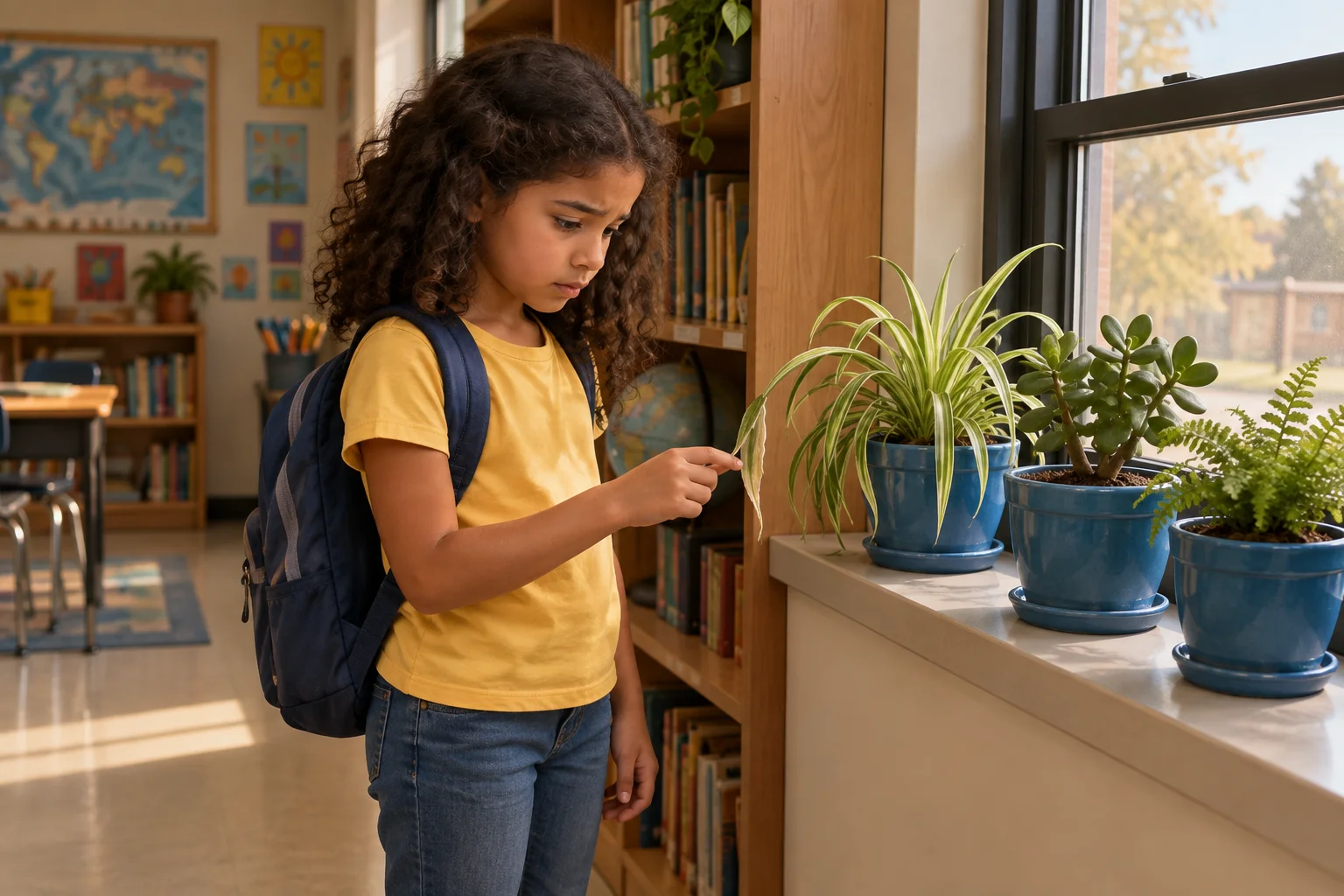
On Monday morning, Amina tucked her backpack beneath the hook with her name on it and hurried to the classroom windowsill. Three little plants sat there in bright blue pots: a spider plant, a jade plant, and a young fern. Their leaves had looked cheerful the week before. Now they bent over the rims as if they were tired after a long walk.
Amina touched one of the leaves with one finger. It felt soft and limp.
“Ms. Rivera,” she called, “the plants look sad.”
Her teacher came over with a basket of picture books. She placed the basket on the rug and leaned close to the windowsill.
“They do look droopy,” Ms. Rivera said. “But we watered them this morning.”
Amina frowned. That was the puzzling part. Every day, a child had given each plant a small drink from the yellow watering can. The soil looked dark, too.
Kai and Imani came to see. Kai tipped his head from side to side, and Imani gently lifted a fern leaf so she could look underneath it.
“Maybe they need more water,” Kai said.
“Maybe they need less,” Imani said.
Amina looked from one friend to the other. “How can we find out?”
Ms. Rivera smiled. “We can observe before we guess. Let’s become plant detectives.”
She found a clipboard, three sheets of paper, and a short ruler. At the top of each sheet, she drew a picture of a plant. Then she helped the children add three small boxes beneath each drawing: one for light, one for soil, and one for leaves.
Each morning, they would record what they noticed. They would look at the light on the windowsill, feel the soil with a clean fingertip, and compare the leaves. They would change only one thing at a time. That way, they could tell which change helped.
Amina liked the idea of finding clues. She took the clipboard and stood beside the window. A narrow stripe of sunshine lay on the floor, but it did not reach the plants. A tall shelf blocked part of the window, and the plants sat in the shadow beside it.
“Light: dim,” Amina said as she wrote. “Soil: wet. Leaves: droopy.”
Kai peered at the paper. “You made the letters very big.”
“I want the plants to be able to read them,” Amina said.
Imani laughed, and even Ms. Rivera chuckled. Then they placed the clipboard on a low table where everyone could reach it.
After circle time, the children went outside to play in the school garden. The garden had raised beds of herbs and flowers, a little stone path, and a wooden fence along the back. Amina was carrying a small bucket of sand when she stopped near the fence.
A red fox stood on the other side.
It was a real wild animal, slim and bright against the green grass. Its reddish coat caught the morning light, and its black-tipped ears pointed toward the garden. The fox did not come closer. It simply watched the children for a moment, then turned its head toward the classroom windows.
Talk about the story
1.What did Amina notice about the plants on Monday morning?
2.What did the children record about the plants each morning?
3.Where did the red fox appear during recess?
4.What change did the children make to the spider plant?
5.Why did the children decide not to water the fern on Tuesday?
6.What did Amina learn during her swimming lesson?
7.What did the children learn about watering the plants?
Loading more stories…
Amina held still. The fox looked at the plants, or perhaps at something beyond them. Its nose moved as it smelled the air.
“Look,” Imani whispered. “It came back.”
Ms. Rivera nodded. “It sometimes visits the garden. We can watch from here, but we give it plenty of space.”
The fox stepped along the far side of the fence. It paused beside a patch of tall grass, then slipped quietly out of sight.
Amina looked back at the classroom. “Maybe it was checking on the plants.”
“Foxes are good at noticing things,” Kai said.
“So are plant detectives,” said Ms. Rivera.
The next morning, Amina arrived early enough to see a pale square of light on the windowsill. It touched the edge of the jade plant but left the spider plant and fern in shadow. Amina called Kai and Imani over, and together they checked the soil.
The soil in all three pots was still damp. Amina pressed her finger into the top of the fern’s pot. The soil felt cool and sticky, like mud after a rain shower.
“Light: dim,” she said. “Soil: very wet. Leaves: still droopy.”
Kai picked up the yellow watering can. “Should we give them another drink?”
Amina reached for the clipboard. Then she stopped. The dark soil seemed to answer for her.
“Maybe we should ask Ms. Rivera first.”
Their teacher joined them. Amina showed her the notes from Monday and Tuesday.
“We have an idea,” Amina said. “But we don’t want to change everything at once.”
Ms. Rivera’s eyes brightened. “That is careful thinking. What could we test?”
The children studied the three plants. The spider plant stood closest to the brighter edge of the window, so Ms. Rivera helped Amina move it to a sunnier place on a nearby table. It was still in the classroom and easy to observe, but now a wide patch of daylight fell across its leaves.
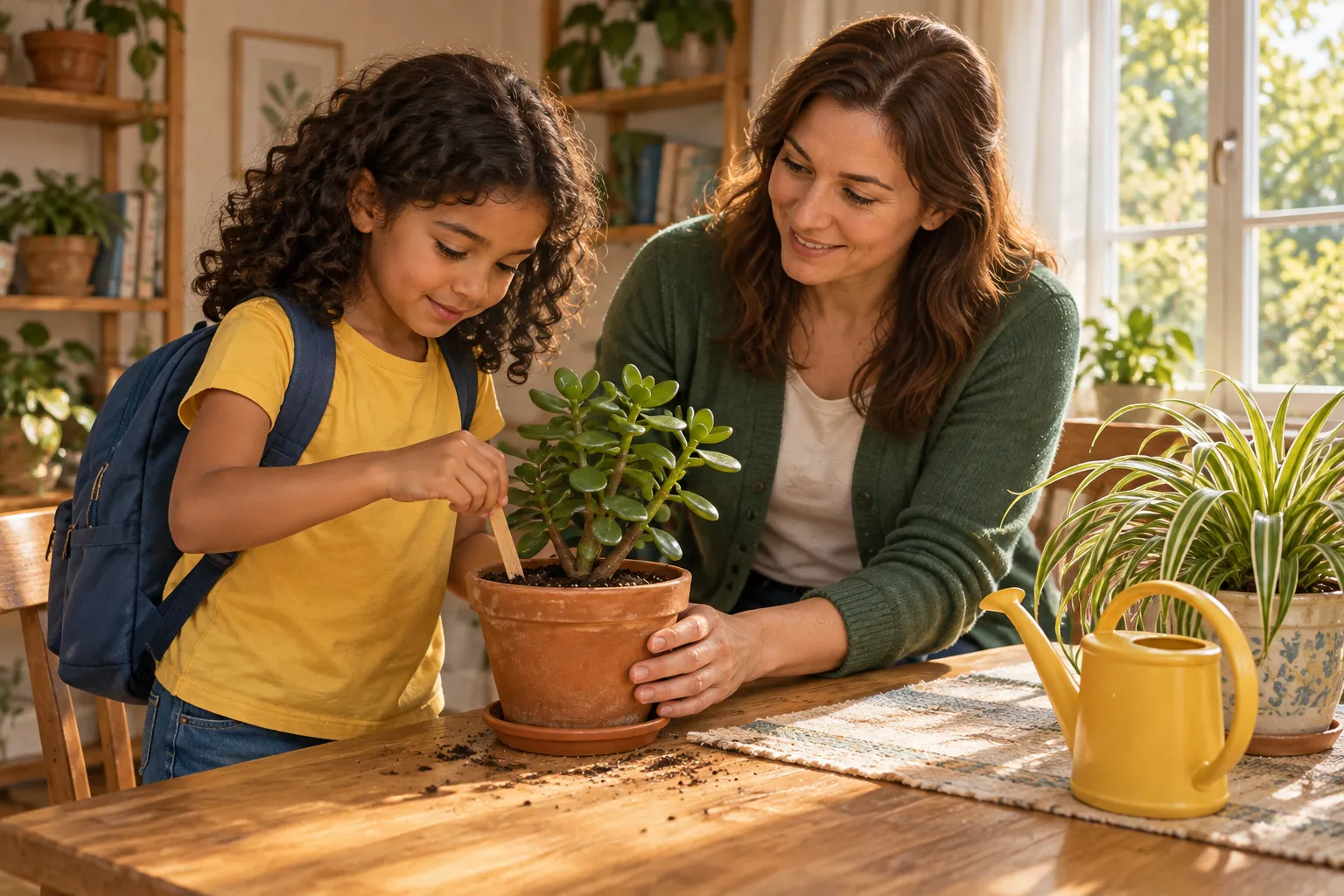
The jade plant’s soil had been packed tightly around the stem. Ms. Rivera gave Amina a small wooden plant marker. With the teacher holding the pot steady, Amina gently loosened the top layer of soil. She made tiny spaces for air without digging deeply.
The fern stayed where it was. Since its soil was already very wet, the children decided not to water it that day.
“One change for each plant,” Amina said. “Then we wait and watch.”
They made a new note on the clipboard. Amina drew a sun beside the spider plant, little lines beside the jade plant, and a water drop with a line through it beside the fern.
At recess, the red fox appeared again near the back fence. This time it sat beneath a young maple tree. Its tail curled around its paws. A breeze stirred the leaves above it, and the fox blinked slowly in the dappled light.
Amina watched from the garden gate. She wanted to show it the clipboard, but she knew the fox needed its distance. Instead, she held the clipboard against her chest and watched the animal notice the world in its own quiet way. After a few minutes, the fox stood, sniffed near the fence, and disappeared into the trees.
On Wednesday morning, the spider plant’s leaves were no longer as limp. They did not stand tall yet, but several had lifted from the rim of the pot. Amina felt a small jump of excitement.
“The brighter light might be helping,” she said.
Amina loosens the jade plant’s soil while Ms. Rivera steadies the pot
The jade plant looked almost the same. Its soil was still damp, though the top felt less packed. The fern’s leaves drooped lower than before.
Kai reached for the watering can. “The fern looks thirsty now.”
Amina almost agreed. The fern did look thirsty. But she remembered the cool, muddy soil beneath its leaves.
“Let’s check deeper,” she said.
Ms. Rivera helped them use a wooden craft stick to test the soil. When they pulled it out, the stick was dark and damp near the bottom.
“Not thirsty yet,” Imani said.
“But it looks thirsty,” Kai replied.
“I know,” said Amina. “We have to wait a little longer.”
That afternoon, Amina had her swimming lesson at the community pool. She changed into her swimsuit and met her instructor, Mr. Chen, at the shallow end. The other children practiced kicking while Amina held a foam noodle beneath her arms.
“Today we’ll practice floating on your back,” Mr. Chen said.
Amina leaned back, but her knees popped up and her shoulders tightened. Water slipped over her ears, and she quickly stood.
“I can’t stay up,” she said.
“You don’t have to do everything at once,” Mr. Chen told her. “Let’s change one small thing. Relax your shoulders first. I’ll support your head.”
Amina tried again. She took a slow breath and let her shoulders soften. Mr. Chen’s hand stayed beneath her head while the noodle supported her back. For two seconds, she floated. Then she lifted her chin and stood up.
“That was longer,” Mr. Chen said. “Would you like to try again?”
Amina thought of the plants. The first attempt had not worked, but that did not mean the next one would fail. She tried again. This time, she kept her arms wide and let her legs stretch out. The water held her for five seconds, then six.
When she stood, drops sparkled on her eyelashes.
“Small changes,” she said.
“And patience,” Mr. Chen added.
On Thursday, the children checked the plants before snack. The spider plant had clearly improved. Its longest leaves lifted toward the light. The jade plant looked a little firmer, too, although one leaf still leaned to the side. The fern remained droopy, but its soil finally felt only slightly damp instead of soaked.
Amina studied the three pots. “We need more time.”
Just then, a shadow moved beyond the classroom window. The red fox stood in the garden, visible between two bushes. It turned its head toward the bright table where the spider plant rested. Then it lowered its nose to the ground and began following a scent through the grass.
The children watched from inside. They did not tap on the glass or call out. They stood quietly until the fox reached the edge of the garden and vanished behind the fence.
“Maybe it found another clue,” Imani said.
“Maybe it just found a good smell,” Kai said.
Amina smiled. “Either way, it kept looking.”
That morning, Ms. Rivera invited the children to compare their records. They placed Monday’s drawing beside Thursday’s. The spider plant’s leaves were drawn lower on Monday and higher on Thursday. The soil notes showed that the fern had stayed wet for several days. The light notes showed that all three plants had spent most of their time in the dim corner.
Amina traced the marks with her finger. “The light and the water are connected. The soil stayed wet because the corner was too dim for the plants to use as much water.”
Ms. Rivera nodded. “That is a strong possibility. We can test it one more day.”
They moved the jade plant beside the spider plant, where the daylight was brighter. They left the fern in its original pot but placed it on a table where the children could keep checking it. The class decided to wait before watering any plant unless the soil felt dry enough to need it.
On Friday morning, Amina burst into the classroom and hurried to the plants.
The spider plant’s leaves had risen like green ribbons. The jade plant stood sturdier, and its thick leaves looked smooth. The fern was still a little bent, but several new tips had begun to uncurl.
Amina called for her friends. Soon the whole class gathered around the windowsill and tables.
Ms. Rivera held up the watering can. “What do you notice?”
“We watered on a schedule,” Amina said, “but the plants didn’t always need water on that schedule.”
“And the corner was too dim,” Imani added.
“The soil stayed damp,” Kai said. “So we gave the plants too much water without meaning to.”
Ms. Rivera placed the watering can on the shelf. “Our first plan was not the best plan. That’s okay. We learned from it.”
Amina looked at the drooping fern. “It still needs time.”
“It does,” said Ms. Rivera. “We’ll keep checking instead of rushing.”
Together, the children made a new watering chart. It did not say to water every morning. Instead, it showed a finger touching soil, a sun shining on leaves, and a small cup used only when the soil was dry. The children chose turns for checking the plants, and Amina carefully taped the chart beside the windowsill.
Before lunch, they went outside. The red fox appeared one last time that week, standing beyond the fence in the soft Friday sunshine. Amina saw it pause beside the maple tree and look toward the school. The fox’s ears lifted, and its tail made one quiet sweep through the grass.
Amina did not know whether the fox noticed the plants or simply enjoyed the morning. She only knew that she was glad it had visited while they were learning to pay attention.
She, Kai, and Imani stood together and watched until the fox slipped between the trees. Then they returned to the classroom, where the plants waited in their brighter places.
At the end of the day, Amina touched the edge of the watering chart. The fern’s newest leaf had opened a little more. Sunlight rested across the green leaves, and the room smelled faintly of damp earth.
Amina sat on the rug with her friends while Ms. Rivera read a book aloud. Beyond the window, the garden grew quiet. On the sill, the plants leaned gently toward the light, and no one reached for the watering can until the soil was ready.
🎧 Listen to this story
Choose a female or male narrator. Listening passes give you access to all public stories — $0.30 for 1 day, $1.80 for 7 days, or $6.00 for 31 days. Every registered user also receives 1 free day of listening each month.
Stories on this website are free. If your child enjoyed this story, you can thank the creator with an optional payment for access to the website’s materials, in an amount you choose.
Enter a dollar amount with no more than two decimal places, such as 0.01 or 1.50.
Have an account? Sign into pay from your credit balance.